
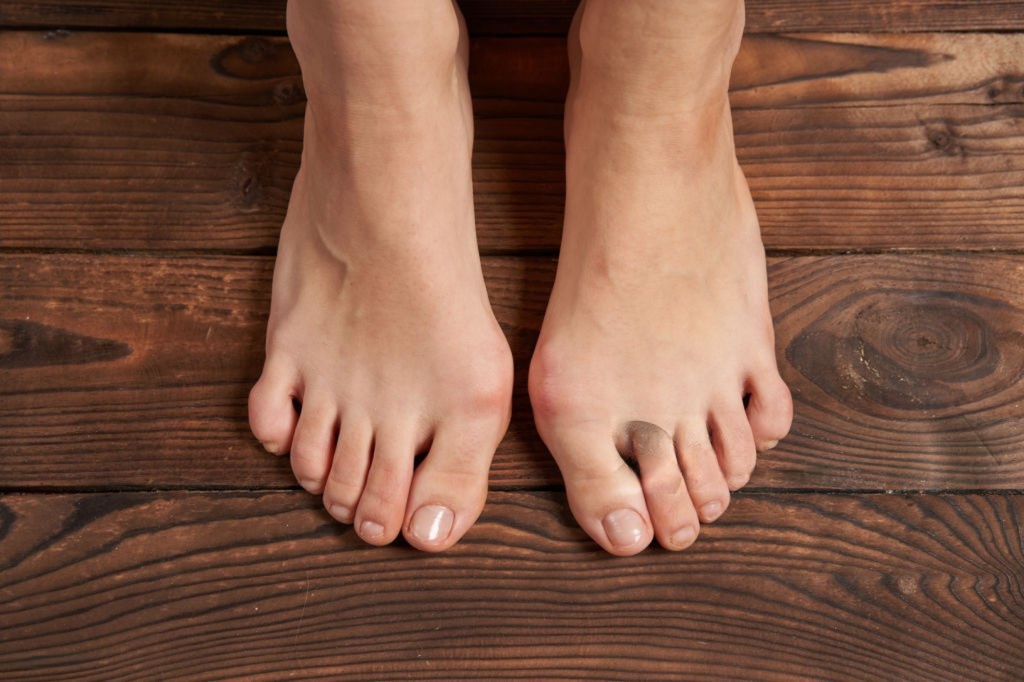
Feet are the most important organ of your body when it comes to walking or moving from one place to place. If you have developed gout or bunions, you will experience redness, pain, and swelling in the big toe joint. The symptoms of both issues might seem alike, but their nature of development is different. In this blog, you will know the key differences, symptoms of gout, and bunions. You will also know when to see a podiatrist.
Bunions and gout can cause serious pain in your feet. Both of them affect the big toe joint, which causes discomfort, including pain, swelling, and redness in the area. You will also see a visible bump on the joint.
The reasons for their onset are different for both. First, you must identify the gout or bunion that’s causing pain in your feet. So, how do you differentiate between a bunion and gout? The main difference between the two is their nature and conditions. Bunions only form locally in the toe joints, but gout is a systemic issue that mainly develops at the metatarsophalangeal (MTP) joints (big toe joints), but it can also develop at other joints, including ankle, elbow, wrists, and fingers.
1. What Are Bunions?
A bunion is a bony bump that forms at the big toe joint. It takes some time to develop bunions. It gradually increases in size and which forces the big toe to bend inward. So, you start feeling uncomfortable walking and wearing shoes.
2. What Is Gout?
Gout is a type of inflammatory arthritis that is caused by the formation of uric acid crystals in the joints. It leads to swelling of the joints and makes it uncomfortable for you. Uric acid is a waste material of the human body, and it gets out of the system with urine. But a high level of uric acid in the blood causes the waste material to be deposited in the joints, which leads to the development of gout.
3. Bunions vs. Gout: Key Differences
Now, let’s take a look at the bunion vs gout symptoms and their differences.
| Feature / Aspect | Bunions | Gout |
|---|---|---|
| What It Is | A structural deformity where the big toe drifts inward, causing a bony bump on the side of the foot | A form of inflammatory arthritis caused by excess uric acid leading to crystal buildup in the joint |
| Cause | Genetics, tight or narrow footwear, flat feet, arthritis, foot mechanics | High uric acid levels from diet, kidney issues, alcohol, obesity, medications, genetics |
| Pain Type | Aching, pressure-related, gradual discomfort | Sudden, intense, throbbing pain—often severe and unbearable |
| Onset of Symptoms | Slow, progressive over months or years | Rapid—symptoms often appear overnight |
| Common Location | Base of the big toe (1st metatarsophalangeal joint) | Big toe joint most common, but can affect ankle, midfoot, or knee |
| Appearance | Visible bump at the side of the big toe, toe deviates inward | Red, swollen, hot, shiny joint with no external bump or bone shift |
| Swelling Type | Mild-to-moderate swelling around the joint | Severe swelling, warmth, and joint inflammation |
| Triggers | Pressure from shoes, prolonged walking or standing | Foods high in purines (red meat, seafood), alcohol, dehydration, stress |
| Who Is at Risk | People with flat feet, family history, women wearing narrow footwear | Men over 40, people with metabolic syndrome, kidney issues, high-purine diet |
| Diagnosis Method | Physical exam, X-ray to assess bone alignment | Blood tests for uric acid, joint fluid analysis, ultrasound |
| Treatment | Footwear changes, orthotics, splints, pain relief, surgery if severe | Medication (NSAIDs, colchicine, allopurinol), diet changes, hydration, lifestyle adjustments |
| Pain Relief Timeline | Improves gradually with support and proper footwear | Pain may improve within days with medication |
| Long-Term Outcome | May worsen if untreated; surgery can correct deformity | Can lead to chronic gout or joint damage if untreated |
| When to See a Podiatrist | If the bump causes pain, difficulty walking, or shoe-fitting issues | If you experience sudden severe joint pain, recurrent flare-ups, or swelling |
Table 1: Differences Between Bunions and Gout
However, one of the main differences between bunions and gout is that bunions develop only in the big toe joint, but gout can form in other joints as well.
4. Common Symptoms to Watch For
You might ask – “How to tell if foot pain is from gout or a bunion?” Well, you will need to look for specific symptoms to correctly identify them. Let’s take a look at them one by one.
Bunion Symptoms
If you have bunions, you can easily see a visual bump forming inside your foot. It usually develops in the joint of the big toe, where the toe connects with the foot. Besides, you might see the following symptoms if you have gout in the joint:
- Tenderness
- Pain
- Restricted motion in the big toe joint
- Redness or inflammation in the area
- The skin might be hardened on the bottom of your foot
- Dark, rough patches on the skin
Gout Symptoms
If you have gout in your foot, you might feel discomfort in one joint. Gout generally forms at the big toe joint, but you can also feel similar discomfort at other joints. Besides, you can look for the following symptoms:
- Intense pain
- Swelling
- Redness
- Heat
You might also experience similar issues in the knees, ankles, and other joints.
5. Can Bunions and Gout Occur Together?
The simple answer would be, yes, both gout and bunions can form at the same time. The common place for these two to form is the big toe joints. However, gout and bunions have different causes for development. Gout forms due to the deposit of uric acid in joints. On the other hand, a bunion is the result of structural deformity in the big toe joint.
6. Diagnosis: How Podiatrists Tell Them Apart
The best way to diagnose whether the foot pain you are suffering from is due to a bunion or gout is to consult with a podiatrist for foot pain. He can examine the area using his clinical knowledge. Upon examining the foot alignment, joint mobility, and tenderness in the area, a podiatrist can determine the cause of the pain.
However, he can also ask you to do some tests – a blood test to see if the uric acid in the blood is under the normal level. The doctor can also ask for an X-ray of the condition of the bone in the big toe joint.
7. Treatment Options for Bunions
Bunion treatment may include surgical and non-surgical procedures. For long-term relief, your doctors may suggest a bunionectomy – the surgical procedure to correct a bunion. However, a professional podiatrist might suggest non-surgical procedures first. Let’s take a look at the non-surgical procedures to relieve bunion pain:
- Wear a padded shoe or use one with customised orthotics
- Choose a shoe that has plenty of room for your toes to make you feel comfortable
- Walk carefully that does not to put pressure on the bunion
- Use insoles with arch support
Your doctor may also prescribe corticosteroid injections to be used for the bunion. If none of the non-surgical procedures work to relieve the pain, a surgical procedure is the last option.
8. Treatment Options for Gout
The gout treatment is focused on treating the gout attack (sudden, intense pain or inflammation at the joint) or preventing future attacks. When you are suffering from a gout attack, you can take an over-the-counter nonsteroidal anti-inflammatory drug to reduce your pain.
You may also find it comforting if you lift your foot and apply ice to the area. It will help reduce swelling and pain in the area.
Besides, the doctor may prescribe medicines to reduce inflammation during a gout attack. For long-term relief from the pain, your doctor might ask you to avoid the following things:
- Reducing alcohol consumption
- Try to avoid sugary beverages
- Do regular exercise
- Manage a healthy body weight
- Start avoiding purine-rich foods (red meat, alcohol, and some types of fish)
You might be confused between arthritis and gout, but there are significant differences. The main thing to notice in a foot arthritis vs gout is that gout attacks are sudden, but arthritis pain is chronic and can affect different joints.
9. When to See a Podiatrist
If you see that you are experiencing a continuous and worsening pain in your toe joint, you have difficulty walking, or wearing shoes – don’t delay, get in touch with a doctor. You should also see a doctor if the affected area has red swelling and a continuous flare-up.
The doctor might suggest an over-the-counter NSAID to reduce the swelling and pain.
Don’t Suffer, Consult a Podiatrist
If you have been suffering from bunions and gout for a long time, it’s time to get in touch with a professional podiatrist. Gout forms due to an excess of uric acid in our body, but a bunion is a bone deformity, requiring surgical procedures to have a permanent solution. If your situation is severe, look for a clinic for bunion treatment in Montreal.
Get in touch with Union Podiatre for a reliable solution for your gout or bunion problem.
Frequently Asked Questions
1. Can gout worsen bunion pain?
Yes, it can happen. Gout adds extra pressure on the already deformed area. So, it adds extra pain to the foot.
2. What can I do to immediately reduce the bunion pain?
A bunion requires surgery to permanently reduce the pain. But you can apply ice or take an NSAID to immediately get relief from the pain.
3. Who has a higher chance of developing bunions?
More than 70% of people with a bunion have a biological parent with the same issue. Besides, people who have a history of foot injury are also at risk of developing bunions.
4. Is walking good for a bunion?
Walking can be a good exercise for people with bunions, but you should consult your doctor first.