
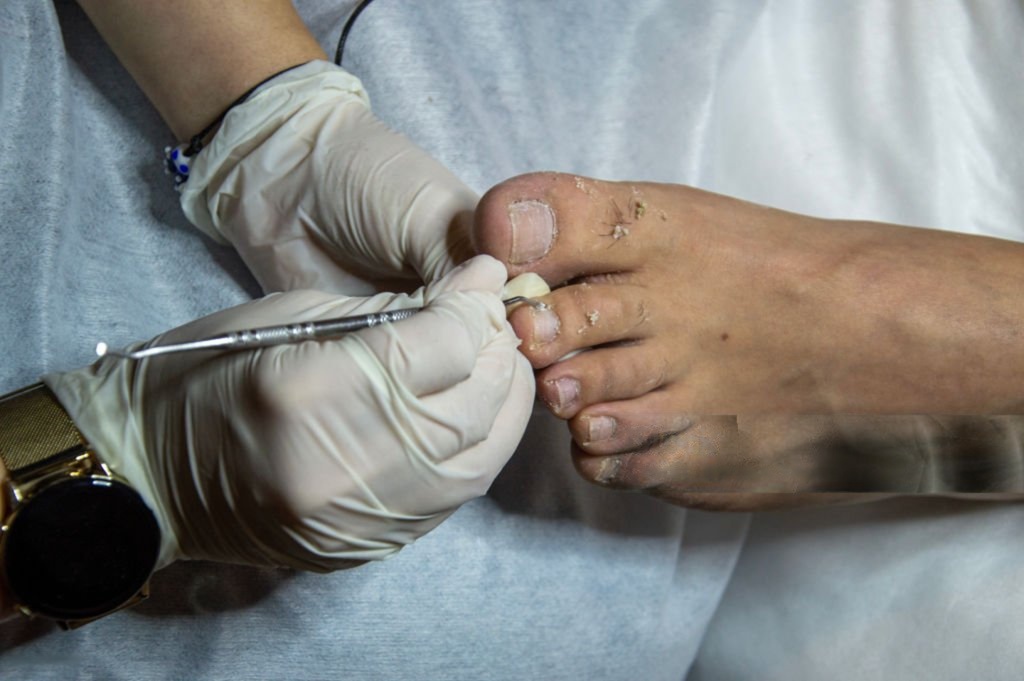
Ingrown toenail is a common foot problem among people. Getting a good clarity on its causes and treatments helps to combat the issue in a better manner.
Around 5% of the Canadian population has ingrown toenails or other toenail issues every year. This is a common problem because it is caused by regular activities like wearing poorly-fitting shoes and improper nail trimming.
Considering a podiatry clinic for toenails is a must because of obtaining the right treatment procedure. Also, people can know the maintenance tips. A podiatrist uses certain specialized tools to treat toenail deformity that cannot be treated at home. In this article, we will discuss the causes, prevention, and probable treatments for ingrown toenails.
What is an Ingrown Toenail?
Ingrown toenails refer to a common condition where the side or corner of a toenail grows into the soft flesh. This accounts for skin inflammation and swelling, and can also lead to nail edge infection.
The nail edge grows into the surrounding skin when you cut or trim nails incorrectly. Also, this can take place when you wear constricting footwear or get any toe injury. Well, the pain can be unbearable, and you must visit a podiatrist.
What are the symptoms of an ingrown toenail?
Let’s talk about the common symptoms of ingrown toenails.
| Symptom | What is it |
| Pain | Feeling pain or soreness whenever you put pressure on the toe |
| Swelling | The surrounding skin around the toenail starts swelling and becomes red |
| Inflammation | Skin looks inflamed because of ingrown nails |
| Pus (Advanced) | Oozing out of the liquid discharge from the site |
| Foul smell (Advanced) | Bad smell coming from the toe |
Table 1: Common symptoms of ingrown toenails
If you experience any of the above-mentioned symptoms, you need medical help as it indicates an ingrown toenail. Well, you must know why this foot problem occurs.
Top Causes of Ingrown Toenails
Here are the top ingrown toenail causes.
Improper Nail Trimming
Nail trimming is a daily activity. Right? Well, this can result in ingrown toenails if you fail to perform it correctly. Mistakes, like cutting the nails too short or cutting them round, indicate a high chance of experiencing this problem. These improper trimming ways cause the nail to grow into the skin.
Ill-Fitting Footwear
Do you select shoes that are stylish or appealing to your eyes? If so, then you are making a mistake that can be hard to compensate for later on. Tight or narrow shoes not only make you feel uncomfortable but also pinch the toes and force the nail to grow into the skin. Therefore, choosing the right footwear is significant for your foot health.
Foot Injury
Injury is one of the common ingrown toenail causes. For example, a heavy object falling on your toe or being stubbed by any means can account for an embedded toenail. Foot injuries are common among sports personalities. Hence, they can experience this disease at any time.
Poor Foot Hygiene
If you don’t keep your feet dry and clean, there is a high chance of feeling skin irritation. This accounts for a high chance of ingrown toenails because the surrounding skin gets softened, and nails can grow deep into it.
Hereditary
Because of genetic tendencies, you might possess a curved nail plate. In such cases, the risk of nails growing into the skin is high. Henceforth, you can experience ingrown toenails.
Let’s see the risk level of each cause.
| Cause | Risk level |
| Improper nail trimming | High |
| Ill-fitting footwear | High |
| Foot injury | Medium |
| Poor foot hygiene | Low |
| Hereditary (curved nail plate) | Medium |
Table 2: Common causes and associated risk levels
What are the Common Prevention Strategies for Ingrown Toenails?
Ingrown toenail prevention is not so challenging. Here are some of the top ways to prevent ingrown toenails.
Adopting Proper Nail Cutting Techniques
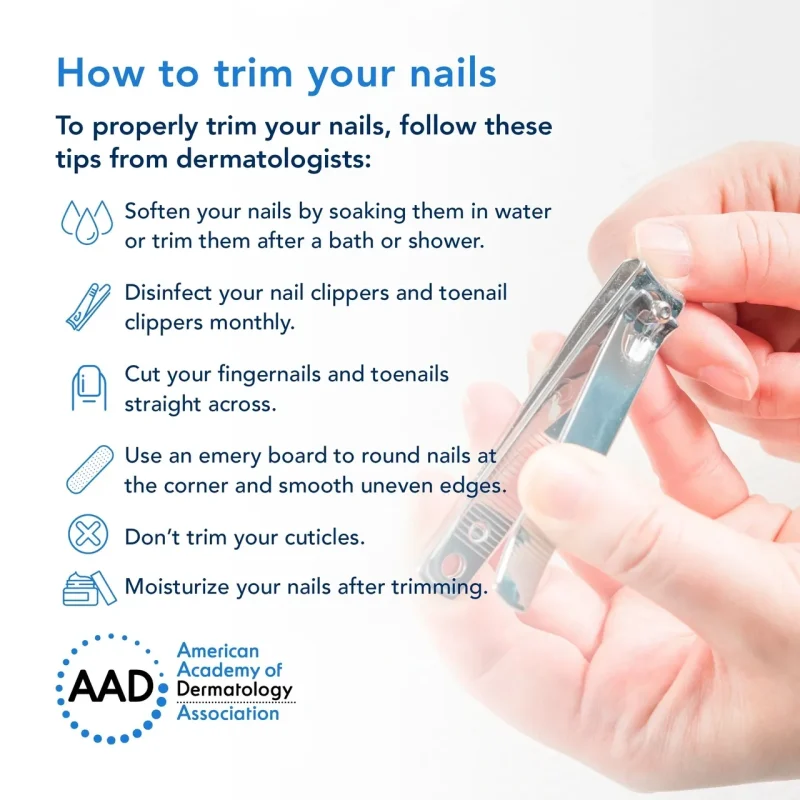
To prevent ingrown toenails, you must choose the right technique to cut or trim. Like, you need to cut it straight. Avoid rounding the edges or curving the nails. Here is a step-by-step process for the right nail trimming process.
Selecting the Right Footwear
The wrong pair of shoes can result in ingrown toenails. Therefore, you need to choose the correct footwear to prevent this problem. Wear the ones with a wider toe box. Also, wear moisture-wicking socks.
Good Foot Hygiene
Maintaining good foot hygiene helps you deal with an ingrown toenail effectively. Wash and dry your feet daily to avoid infection. Also, apply a lotion regularly to keep your feet hydrated.
Daily Checkups with a Podiatrist
If you search for ‘foot care specialist near me’, you can find experienced podiatrists. You need to select a trusted one and get regular checkups. This helps you prevent ingrown toenails because any encountered symptom is acknowledged in the first instance. This is more important for athletes and diabetic patients.
Let’s see how often you need to prioritize the prevention strategies.
| Prevention habit | Advantage | Suggested frequency |
| Right nail trimming | Preventing nail edge penetration | Every 2 to 4 weeks |
| Correct footwear | Lowering pressure on nails | Regularly |
| Good foot hygiene | Preventing infections | Regularly |
| Podiatry checkups | Early detection of foot problems | Once or twice in a year |
Table 3: Frequency of top prevention strategies
What are the Top Treatment Options for Ingrown Toenails?
Choosing the correct ingrown toenail treatment helps to treat this foot disease perfectly. Here are some of the vital ones.
At-Home Treatments
Ingrown toenails can be treated at home, especially for the mild cases. For example, soaking your feet in warm and soapy water can be a good treatment. Do this for 10-20 minutes at least thrice daily.
Placing cotton or dental floss under the toenail can help treat this disease. Also, apply petroleum jelly to the tender area. Applying antibiotic ointments can also be a probable consideration.
Professional Treatments
If the symptoms persist, you must seek a podiatrist for ingrown toenail. Let’s explore the professional treatments.
Oral Antibiotics
If you get an infection in the toenail, it must be treated quickly before it gets worse. Here, the podiatrist might prescribe oral antibiotics. Some of the common medications are dicloxacillin, cephalexin, clindamycin, etc.
Partial or Total Nail Avulsion
Podiatrists perform a partial nail avulsion to remove the ingrown part of your toenail. In severe cases, they perform total nail avulsion. Well, local anesthesia is considered to execute such treatments.
Matricectomy
Matricectomy is an effective ingrown toenail treatment that offers a permanent solution to this foot problem. This surgical process removes the nail matrix permanently, alongside removing the tissue that creates the nail. This treatment process is adopted when you have a curved or wide toenail, an abnormal toe position, or injured toenails.
When an Ingrown Toenail Becomes an Emergency?
Ingrown toenails can be cured at home. Well, there are some instances when you should seek immediate treatment, and relying on a podiatrist is important. Let’s see.
- Severe infection (red streaks)
- Fever
- Severe pain
- Excessive bleeding
Wrapping Up
Ingrown toenails are common among people because the disease is caused due to regular habits. Some of the key causes are wearing tight shoes, improper nail trimming, poor foot hygiene, etc. You can manage this disease by choosing the right footwear, adopting the right trimming technique, and maintaining good foot hygiene. Podiatry clinics perform a range of treatments, like partial nail avulsion, total nail avulsion, and Matricectomy.
Planning to Treat Ingrown Toenails?
We offer a trusted and reputable private podiatry center, specializing in treating a range of foot problems. Visit us and seek the right treatment for an ingrown toenail. This helps you to solve the problem quickly and with utmost care so that you do not feel any trouble in your feet.
Frequently Asked Questions
1. Can I get an ingrown toenail from a pedicure?
Yes, you can. Incorrect cutting or trimming of nails results in ingrown toenails. Therefore, you can get the disease if the salon personnel cut your nails incorrectly. Always choose a certified professional for it.
2. How long can I live with an ingrown toenail?
If you witness any symptoms, you must start the home remedies. If you do not see any improvement within 2 to 3 days after using the home remedies, you must seek a podiatrist. Don’t wait for more than 3 days.
3. Are there any risks associated with treating an ingrown nail?
Treating ingrown toenails is not so challenging. However, complications can be seen if the adopted procedure is not performed correctly. Patients with poor circulation might experience slow healing. Patients exhibiting allergic reactions to local anesthetics are unsuitable for partial or total nail avulsion.
4. Can ingrown toenails lead to more serious health issues?
Yes, an ingrown toenail can lead to serious health problems. Like, a spreading infection that involves the bone can result in foot ulcers. Also, there is a chance of tissue death.